
Who Needs What?
Walk-in coolers are indispensable for maintaining cold storage, but not every business has the same needs. The main differences between commercial and industrial coolers often align with the type and scale of the operation that uses them.
Typical Users of Commercial Walk-Ins
Commercial walk-in coolers are a common feature in small to medium-sized businesses where refrigeration needs are consistent but not extensive. These units are designed for convenience, efficiency, and moderate usage.
- Restaurants and Cafes – Restaurants rely on commercial walk-ins to store fresh produce, dairy, and prepped meals. Their size and cooling capabilities are ideal for maintaining short-term stock levels.
- Small Grocery Stores – These businesses use commercial coolers to keep perishable goods like fruits, vegetables, and meats fresh.
- Florists – Besides food, commercial walk-ins are often used by flower shops to preserve delicate floral arrangements under controlled temperatures.
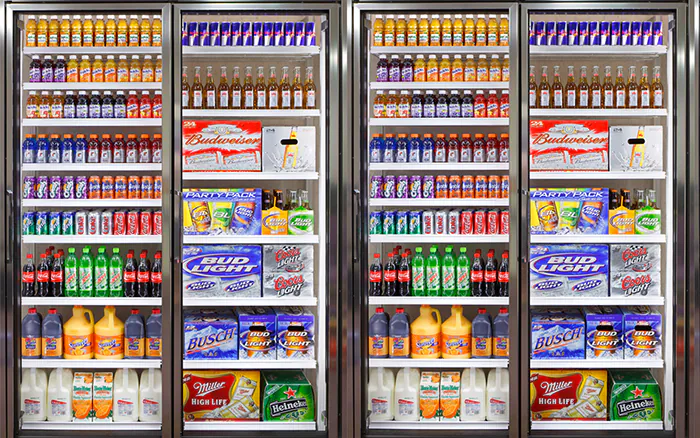
- Convenience Stores – Smaller retail locations use these coolers for beverages, snacks, and grab-and-go items, as well as back-of-house inventory storage.
For businesses in these industries, the moderate capacity and energy efficiency of commercial walk-ins make them a practical and economical choice.
Industries That Benefit from Industrial Walk-Ins
Industrial walk-ins, on the other hand, are built to handle large-scale, heavy-duty storage needs. They are often used in industries where high capacity and robust performance are non-negotiable.
- Warehouses and Distribution Centers – Large businesses use industrial coolers to store bulk products, including frozen food or beverages, before distribution.
- Food Processing Plants – These facilities rely on industrial walk-ins to store massive quantities of raw ingredients and packaged goods at precise temperatures.
- Pharmaceutical and Biotech Industries – Certain medicines and vaccines require specialized storage, often at extremely low temperatures, which industrial units can provide.
- Cold Chain Logistics – Companies managing cold chain transportation use industrial coolers during various stages of shipping to maintain product integrity.
For these high-demand industries, durability and scalability are critical. Industrial walk-ins are designed to meet intense performance requirements over extended periods.
Performance Differences
Performance is another critical area where commercial and industrial walk-in coolers diverge. Their cooling capacity, durability, and overall efficiency are tailored to their respective use cases.
Cooling Capacity and Temperature Control
- Commercial Walk-Ins: These units are tailored for smaller storage needs, typically ranging in capacity from 150 to 1,000 cubic feet. They maintain temperatures well for standard restaurant or grocery store storage needs, perfect for items like fresh produce, meats, and dairy.
- Industrial Walk-Ins: Designed for scalability, industrial units can have capacities exceeding several thousand cubic feet. They offer precise temperature control, often supporting ultra-low temperature ranges for products like frozen seafood, pharmaceuticals, or specialty chemicals.
Industrial coolers have additional features such as advanced monitoring systems and backup power support to ensure uninterrupted temperature maintenance in case of power outages.
Durability and Materials
- Commercial Units: Commercial coolers are built with standard-grade materials, making them suitable for moderate wear and tear. They may feature insulated panels and lightweight aluminum construction, which helps them perform effectively while keeping costs low.
- Industrial Units: Heavy-duty materials like thick stainless steel panels and reinforced insulation characterize industrial models. They are engineered to handle the rigors of continuous use, withstanding frequent access, heavy loads, and harsh environmental conditions such as extreme temperatures or humidity.
Maintenance Requirements
While both types of coolers require regular maintenance, industrial units often demand more robust servicing practices due to their complex systems and heavy use. Sensors, refrigerants, and seals require ongoing attention to prevent costly breakdowns.
Cost Comparison
Another major difference between commercial and industrial walk-in coolers lies in their cost. These units differ in upfront investment, as well as ongoing operational expenses such as energy use and maintenance.
Upfront Costs
- Commercial Walk-Ins: These units are more affordable upfront, with costs starting as low as $5,000 for smaller models. They’re ideal for small businesses with modest budgets.
- Industrial Walk-Ins: Given their larger size, custom constructions, and higher performance capabilities, industrial coolers can range from $15,000 to $50,000—or more. This makes them a significant capital expenditure, suitable for businesses with large-scale storage needs.
Energy Efficiency
- Commercial Units: Most commercial systems are designed with energy efficiency in mind, keeping costs manageable for smaller spaces. Look for models with Energy Star certifications for additional savings.
- Industrial Units: Industrial coolers, while often built with energy-saving technology, require more energy to maintain their large-scale environment. Variable-speed compressors and premium insulation can help reduce operational costs, but the electric bills are often higher than those of commercial coolers.
Long-Term Value
While industrial walk-ins may cost more initially, they provide a better long-term return on investment for businesses with higher storage needs. Their durability, scalability, and customization options make them cost-effective over time. For smaller operations, however, commercial coolers are more than sufficient for ensuring quality storage and cost efficiency.
Contact Us to Find the Right Walk-In Cooler for Your Business
Both commercial and industrial walk-in coolers offer distinct advantages, and the right choice depends on your business’s specific needs. Whether you’re running a small café or managing a large warehouse, finding the right solution ensures efficiency, reliability, and peace of mind.
Need help deciding? Our team is ready to assist you in evaluating your options, discussing your storage requirements, and identifying the ideal walk-in cooler for your setup. Contact us today for expert guidance or to request a personalized quote!