
The Ultimate Guide to Convenience Store Design
24+ years in business · 2,500+ completed projects
A profitable convenience store is never an accident. It's the product of deliberate design — floor plans engineered to guide foot traffic past high-margin merchandise, interior finishes that signal quality and cleanliness, fixture layouts sized to maximum SKU density without clutter, and a cohesive brand experience that converts first-time customers into daily regulars. Every square foot of your property, from the fuel canopy down to the checkout counter, either earns its keep or drags down your store's revenue potential.
At JayComp Development, we've spent 24+ years building exactly that kind of high-performance convenience store across 2,500+ completed projects. We consult, plan, design, develop, furnish, and equip — the full scope of what turns a building into a profitable retail operation. This guide walks through the core disciplines of convenience store design and points you to deeper resources on every subtopic. Call our team at 877-843-0183 or reach out through our contact page to talk through your project.
Key takeaways
- Convenience store design is the planning of a store's layout, interior, equipment and food service before anything is built or bought.
- The layout steers foot traffic: destination items such as cold beverages sit deep in the store so shoppers pass high-margin and impulse items on the way.
- Layout and equipment have to be planned together — the floor plan decides which coolers, shelving and food-service equipment fit, and their power and plumbing needs shape the plan.
- Code requirements (ADA, health department, fire marshal, building code) are designed in up front, not retrofitted.
- JayComp Development has completed 2,500+ store projects for owner-operators across all 50 states. If you are hiring, see how to choose a convenience store design firm.
Why Professional Convenience Store Design Matters
The retail landscape is hyper-competitive. Customers have options within five minutes of wherever they are. What separates the stores that capture market share from the ones that hemorrhage it is rarely the product selection — it's the physical environment.
A well-designed convenience store:
- Directs foot traffic deliberately. High-margin items are placed where customers will see them; destination items like cold beverages and staple groceries sit deep in the store so shoppers walk past everything profitable on the way there.
- Communicates quality at first glance. Bright LED lighting, clean finishes, and thoughtful interior design signal to customers that your food is fresh, your facilities are safe, and your operation is serious.
- Maximizes revenue per square foot. Shelving heights, aisle widths, endcap placement, and fixture integration are calibrated to display the most SKUs possible without making the space feel cramped or chaotic.
- Meets every code requirement. ADA accessibility, health department sanitation, fire marshal compliance, and municipal building code are all baked into the plan before construction begins — not retrofit in after the fact.
Stores that skip professional design work at build-out typically pay for it over and over again in lost sales, failed inspections, inefficient workflows, and costly remodels within the first five years.
Core Elements of Convenience Store Design
Mastering the Store Layout
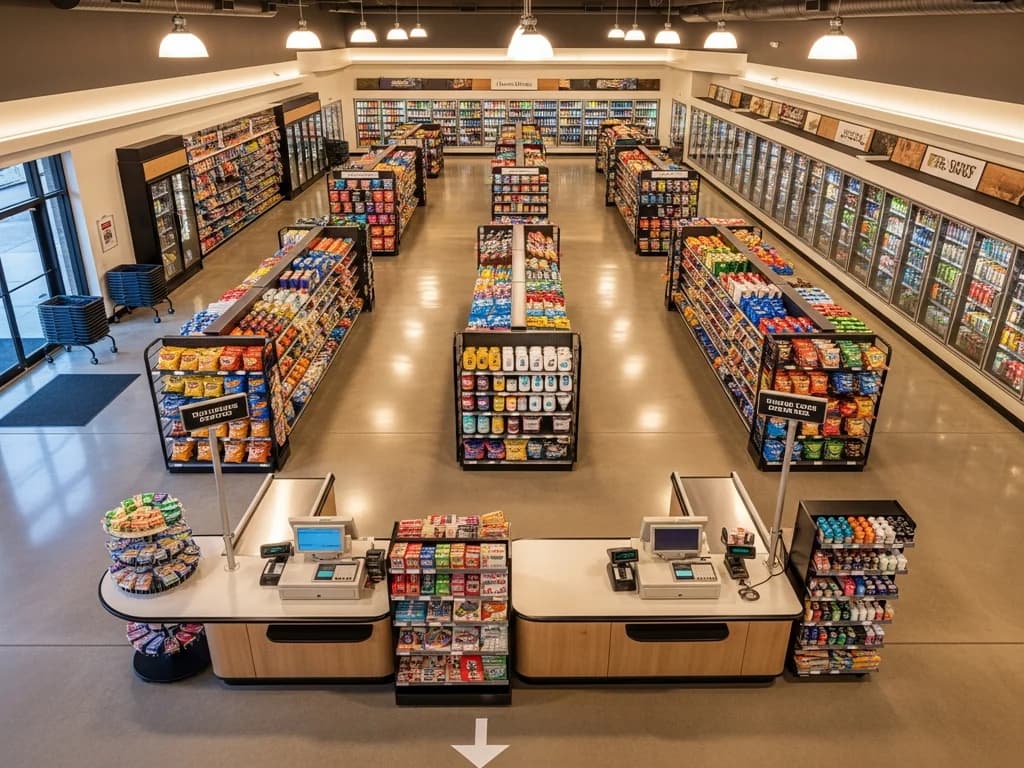
The way you arrange your aisles, displays, and checkout counters directly impacts your bottom line. A strategic layout controls the flow of foot traffic, gently guiding customers past high-margin items like hot food, beverages, and impulse purchases. Whether you choose a grid, loop, or free-flow layout, the goal is to make navigation intuitive while exposing shoppers to as much merchandise as possible.
For the full breakdown of grid, loop, angular, and forced-path layouts — and which fits your specific building — see our dedicated guide to convenience store layout.
Crafting the Interior Environment
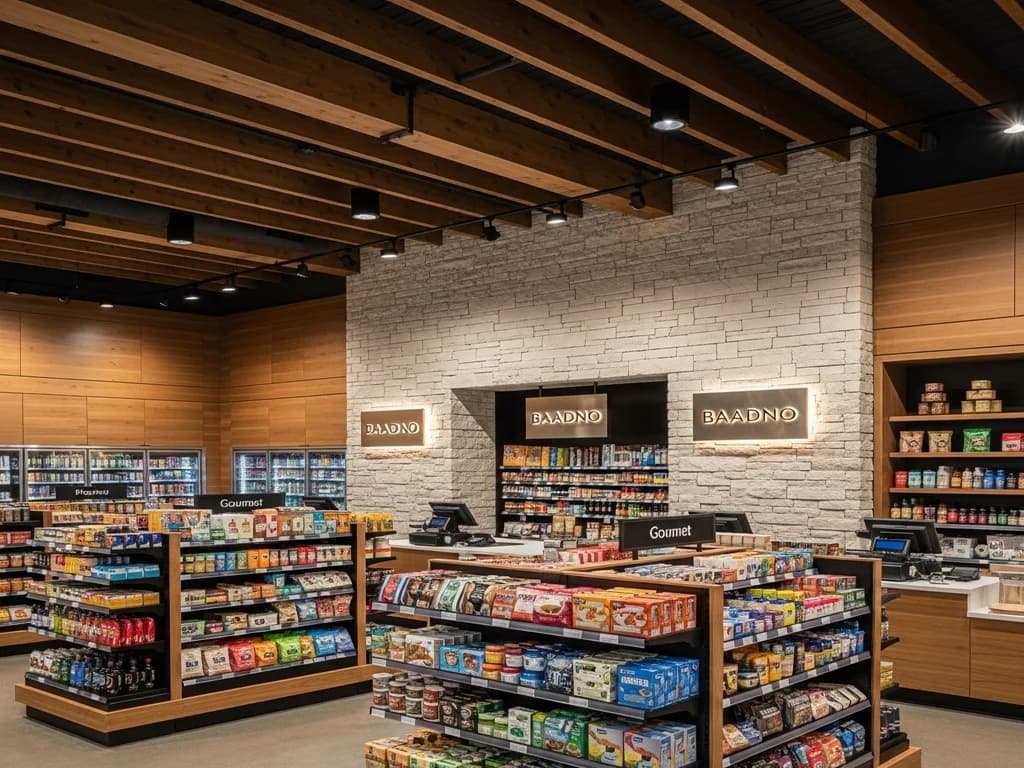
Interior design is strategic. Color psychology, lighting temperature, and material selection all shape how customers perceive your store. Bright, clean, modern interiors signal quality and safety — especially critical for stores with fresh food or beverage programs. Darker, richer tones can anchor premium wine and spirits departments. Material choice — polished concrete, luxury vinyl tile, stacked stone veneer on accent walls — drives the atmosphere your brand projects.
Our convenience store interior design guide covers the psychology of color, strategic lighting, material selection, and how to build a cohesive brand experience through physical design.
Staying Ahead With Industry Trends
The convenience store industry moves fast. Self-checkout kiosks, mobile ordering pickup counters, EV charging integration, expanded fresh food programs, and AI-driven inventory management are all shifting the baseline of what customers expect. Designing a store that accommodates these modern expectations — and leaves headroom to adopt what's coming next — is the difference between a building that ages gracefully and one that feels dated inside five years.
Our convenience store trends guide covers what's driving consumer expectations today and what forward-thinking operators are building into their stores.
Maximizing Small Store Design
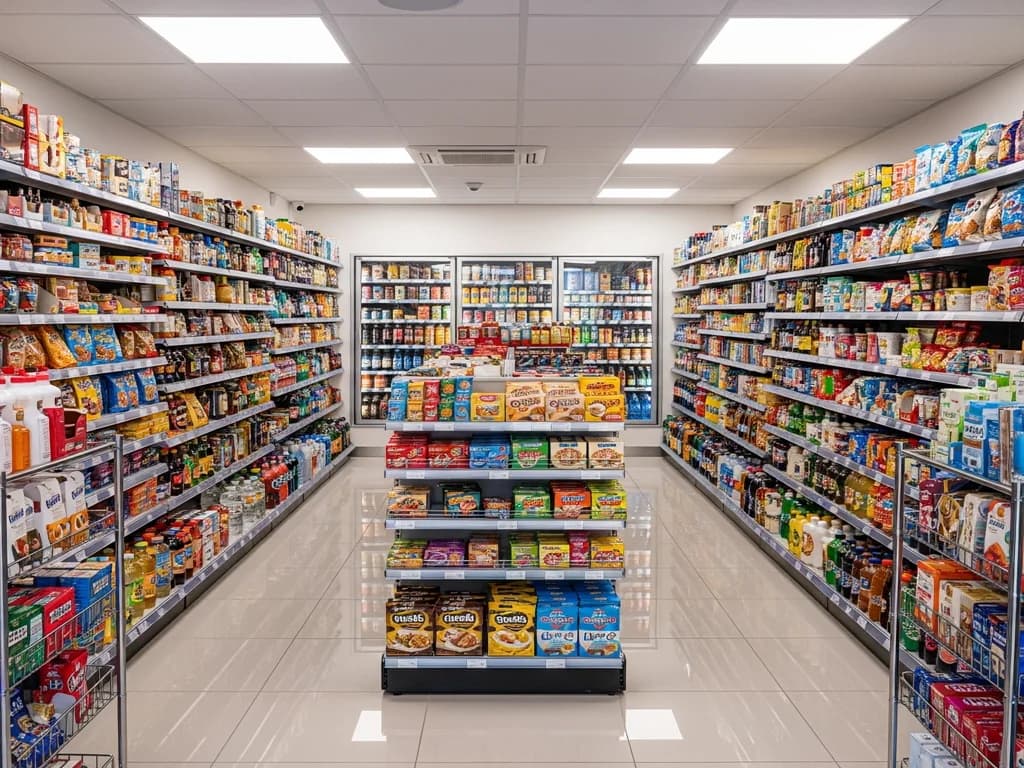
Smaller square footage doesn't mean smaller revenue. With the right design, compact stores yield incredibly high sales per square foot. Vertical merchandising, multi-purpose fixtures, strategic lighting, and disciplined SKU selection let a 1,200-square-foot neighborhood market punch far above its weight class.
Our small store design guide walks through the specific strategies that turn tight footprints into highly profitable retail environments.
Gas Station Convenience Store Design
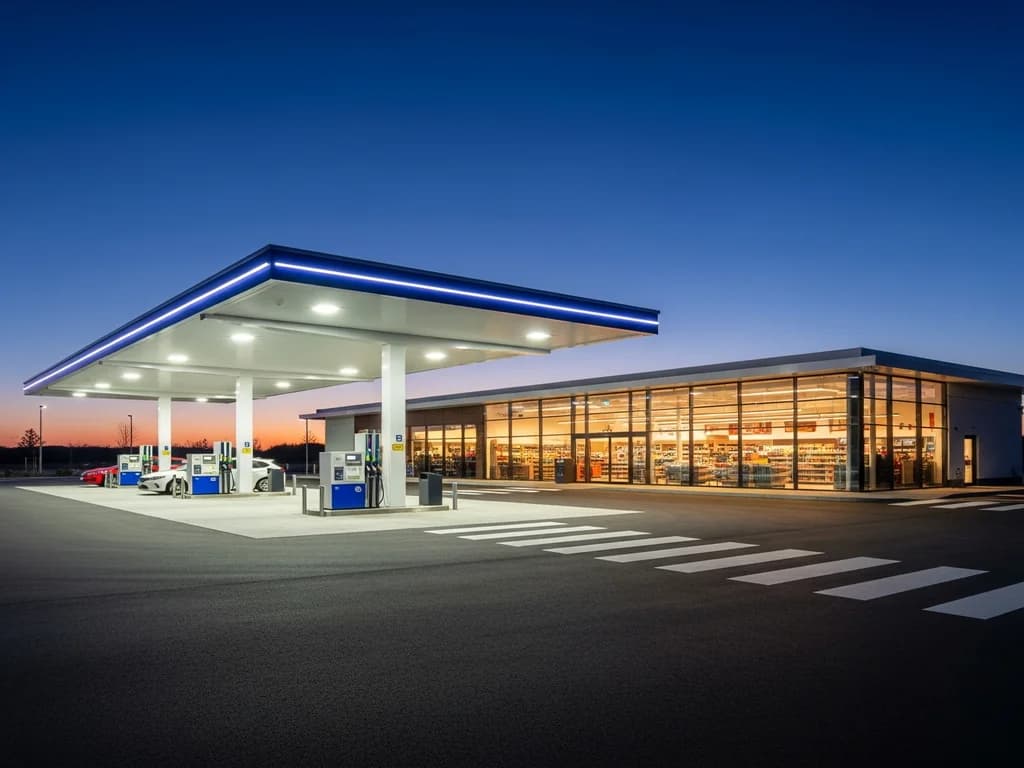
When a convenience store is attached to a fuel station, the design equation shifts. The exterior has to capture the attention of passing motorists at highway speed. The interior has to cater to drivers looking for speed and convenience. Efficient pathways from the fuel pumps to the restrooms and checkout counters are essential, as is prioritizing grab-and-go food and automotive supplies.
Our gas station convenience store design guide covers curb appeal, pump-to-store conversion, canopy branding, and the specific layout demands of dual-purpose fuel/retail environments.
How Design Connects to Equipment and Food Service
Convenience store design doesn't exist in isolation. The layout you choose dictates what equipment fits — and the equipment you install shapes the experience customers have inside your store.
- Floor plans and merchandise placement. See our dedicated convenience store floor plans pillar for deeper reading on store-type-specific floor plan strategies.
- Equipment selection. Walk-in coolers from Leer, KPS, and Crown Tonka; refrigeration from Heatcraft and Russell; glass doors from Styleline, Anthony, and Commercial Display Systems; shelving from Madix; cabinetry from Royston; commercial vent hoods from Captive Air. Our convenience store equipment pillar covers what we supply and why we specify each brand.
- Food service integration. If your operation includes hot food, coffee, fresh grab-and-go, or a branded QSR, the design has to accommodate commercial kitchen requirements, ventilation, food safety zones, and queue management. Our convenience store food service design pillar covers the full scope.
The Role of Professional Development Services
Designing a convenience store is a multi-disciplinary process. Architects, civil engineers, mechanical engineers, equipment specialists, general contractors, health inspectors, fire marshals, and municipal code officials all have a say in what gets built. Attempting to coordinate this web of professionals alone typically results in costly delays, budget overruns, and suboptimal design choices.
At JayComp Development, we serve as your single point of contact across the entire project lifecycle. We handle site evaluation, architectural planning, equipment specification, permitting, construction coordination, and final fit-out. Your job is to run the business. Our job is to deliver the building that lets you run it profitably.
Streamlined Project Management
From the initial feasibility study to the final walkthrough, we oversee every detail. We align the architectural plans with your business goals, coordinate schedules across trades, manage equipment procurement and delivery, and ensure construction proceeds on time and within budget.
Equipment Procurement and Integration
Modern convenience stores rely on massive amounts of specialized equipment — walk-in coolers, food service counters, POS systems, fuel dispensers, hoods, cabinets, shelving. We ensure that architectural plans account for the exact spatial, electrical, and plumbing requirements of the equipment you're installing, preventing the expensive retrofits that plague projects handled by disconnected contractors.
The Complete Design Process
For a step-by-step walkthrough of how a convenience store design project flows from initial concept to grand opening, see our convenience store design process pillar — it covers site evaluation, permitting, construction phases, equipment installation, and launch.
Our Target: Owner-Operators, Not Corporate Fleets
We want to be direct about who we serve best. JayComp Development works with independent operators and small-to-mid-size owner-operators — typically portfolios of 100 stores or less. These are the buyers who are using their own capital, know what they want, and need a trusted partner to walk them through a high-stakes investment.
We're not optimized for Circle K, 7-Eleven, ExxonMobil, or Valero — the corporatized chains with dozens of internal managers, slow decision cycles, and procurement systems that squeeze every vendor to the bone. That's a different business model than what we deliver.
If you're an owner-operator planning a new build, a major remodel, or a portfolio expansion, you're exactly who we're built to serve.
Nationwide Design Coverage
JayComp Development designs and builds convenience stores across all 50 states. For state-specific information on our c-store design services, see our convenience store design services hub — it links to dedicated pages for each state we serve, covering local code, trade-area demographics, and regional operator considerations.
Partner With JayComp Development
Your convenience store's design is the strongest tool you have to influence customer behavior, build brand loyalty, and drive revenue. Investing in professional architectural planning, strategic site selection, and optimized interior layouts sets the stage for long-term success in a hyper-competitive market.
At JayComp Development, we combine industry-leading expertise with a deep commitment to our clients' success. 24+ years in business, 2,500+ completed projects, and an owner-operator-first approach to every engagement. We understand the unique challenges of the convenience retail and fuel industries, and we have the knowledge and resources to bring your vision to life.
Take the first step toward a more profitable store. Reach out to us via our contact page or call our design specialists directly at 877-843-0183 to schedule your initial consultation.
Where to Go Next
- Layout strategy: convenience store layout
- Interior design: convenience store interior design
- Industry trends: convenience store trends
- Small store design: small convenience store design
- Gas station c-stores: gas station convenience store design
- Floor plans: convenience store floor plans
- Equipment: convenience store equipment
- By state: convenience store design services — all 50 states
- Food service: convenience store food service design
- Process overview: convenience store design process
- Development & site work: convenience store development
Get a quote
Ready to Plan Your Project?
Call JayComp Development directly at (877) 843-0183, or fill out the form and our team will be in touch. 24+ years of experience, 2,500+ completed projects, and honest guidance on what your project actually needs.
Email: sales@jaycompdevelopment.com
Location: 9310 OK-1 S, Ravia, OK 73455