
Walk-In Cooler Installation Cost: What Actually Drives Your Quote
24+ years in business · 2,500+ completed projects
If you're researching walk-in cooler installation cost, you've probably already found that the range of numbers being thrown around online is enormous. That's because every credible quote on a commercial walk-in cooler is site-specific — the variables involved make flat-rate pricing either dishonest (artificially low until you hit the hidden extras) or wildly inflated (padded to cover worst-case conditions that don't apply to your site). Neither approach serves the operator making the investment.
JayComp Development quotes every walk-in cooler installation custom. We walk through the specific variables that affect your project, explain why each one matters, and deliver a quote that reflects exactly what your site and your business need. With 24+ years in business and 2,500+ completed projects, we've priced out enough installations across enough site conditions to know what actually moves the number. Call our team at 877-843-0183 or reach out through our contact page for a custom quote on your project.
Why We Don't Publish Flat-Rate Pricing
The commercial refrigeration market has cycled through flat-rate pricing experiments for decades, and they consistently fail operators in one of two ways.
Undersell, then charge extras. The published price covers only a baseline installation — no electrical upgrades, no concrete pad, no removal of existing equipment, no permit fees. Every line item beyond the baseline becomes a change order, and the final invoice is often 30–50% above the initial quote.
Oversell to cover worst cases. The published price bakes in every possible contingency across every possible site. If your site is standard, you're paying a significant premium for conditions that don't apply to you.
Custom quoting eliminates both problems. Our quote line-items every cost driver — the same ones covered below — and explains why each one is priced the way it is. You see exactly what you're paying for and why.
Size and Storage Capacity
The physical dimensions of the walk-in cooler are the first major cost driver. A 10×10 beverage cooler in a small convenience store is a completely different project than a 40×60 back-of-store walk-in serving a high-volume grocery operation.
Scale affects:
- Insulated panel quantity and fabrication — more panels, more cam-lock hardware, more labor to assemble
- Refrigeration system horsepower — larger interiors require more cooling capacity, which scales up compressor, evaporator, and condenser sizing
- Door count and configuration — standard swing door, heavy-duty sliding door, glass display doors for customer access; each door adds cost
- Interior fit-out — shelving, lighting, pan slides, door sweeps
Height matters beyond just floor footprint. A taller cooler accommodates taller shelving runs or pallet storage, but requires taller panels and affects interior air circulation engineering.
Insulation Thickness and Panel R-Value
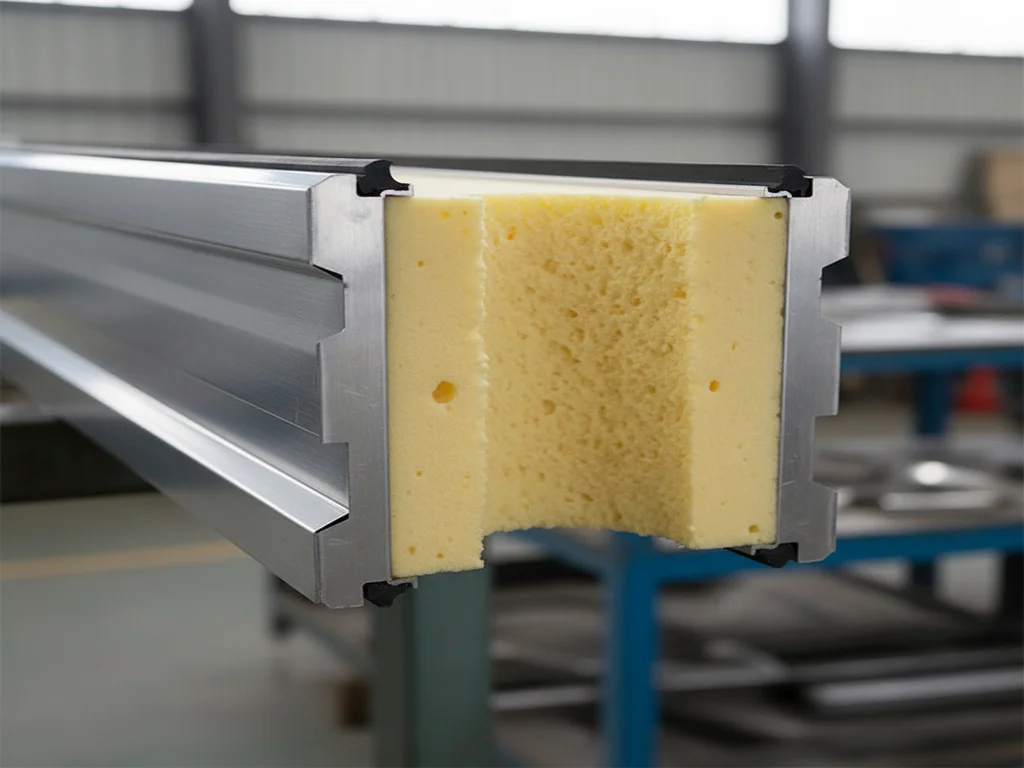
The thermal envelope is where your operating cost lives for the next decade. Thicker, higher-R-value panels cost more up front but cut the workload on the compressor — which means lower electricity bills every month the unit runs.
Typical walk-in cooler panel options:
- Four-inch polyurethane panels — standard for moderate applications, lowest upfront cost
- Five-inch polyurethane panels — meaningful R-value upgrade, commonly specified for high-duty applications
- Six-inch panels — often specified for walk-in freezer installation projects where the thermal differential is greater
We specify panel thickness based on your ambient environment, door opening frequency, and operating temperature requirements. Over-specifying wastes budget; under-specifying drives up operating cost indefinitely. The right answer is usually in the middle, tuned to your application.
For the full breakdown of how insulation quality drives operating economics, see our walk-in cooler energy efficiency guide.
Compressor Horsepower and System Type
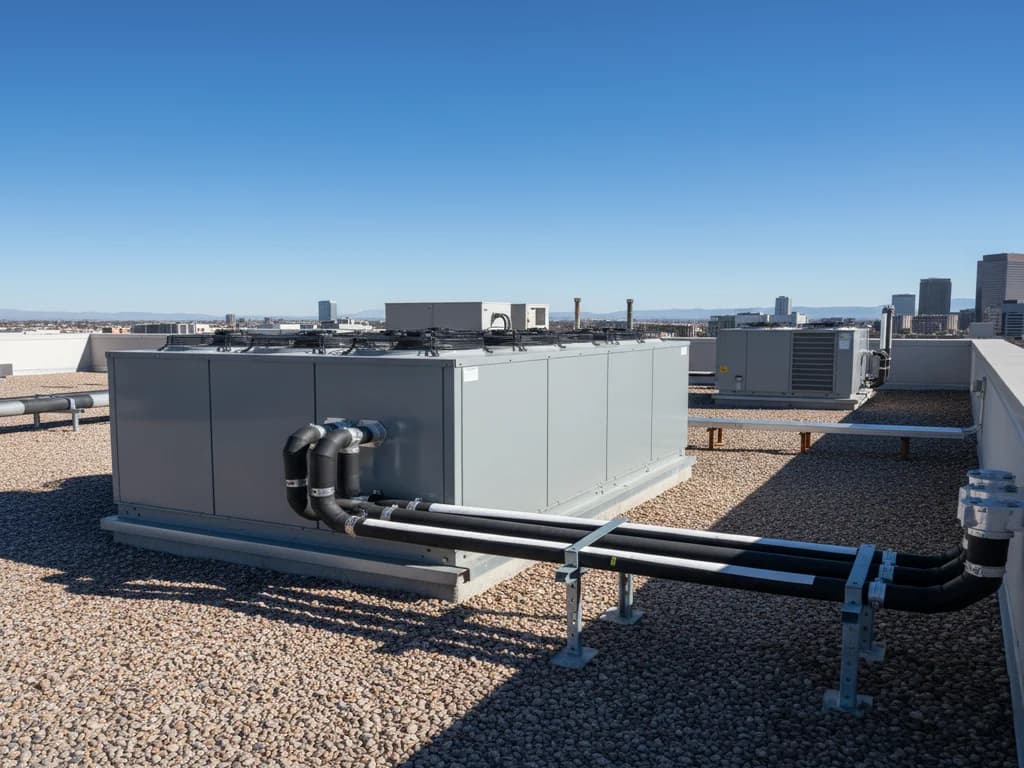
The refrigeration system accounts for a substantial chunk of any walk-in cooler project. Two decisions drive the cost most:
Self-Contained vs. Remote
Self-contained systems package the compressor, condenser, and evaporator into a single piece of equipment mounted directly on the cooler. Lower installation cost, simpler refrigerant line routing, but the condenser exhausts heat and noise directly into your interior space — forcing your HVAC to work harder and creating a loud back-of-house environment.
Remote systems move the compressor and condenser outside the cooler (rooftop or exterior pad) and run copper refrigerant lines between the outdoor unit and the indoor evaporator. Higher installation cost — more copper, more brazing, more electrical routing — but better long-term performance and lower ambient heat load on the building.
For commercial installations where the cooler will run hard for its full design life, we almost always recommend remote systems. The operating savings and improved reliability over 10+ years significantly outweigh the higher upfront install cost.
Compressor Sizing
Compressor horsepower has to match the thermal load of the cooler — its size, operating temperature, door-opening frequency, and ambient environment. Undersized compressors run continuously, fail early, and can't hold setpoint in summer peak conditions. Oversized compressors short-cycle, which is equally destructive.
We specify Heatcraft and Russell refrigeration packages sized precisely to your load calculation. Precise sizing is one of the specific reasons professional installation delivers long-term value that a generic flat-rate quote can't.
Site Preparation Requirements
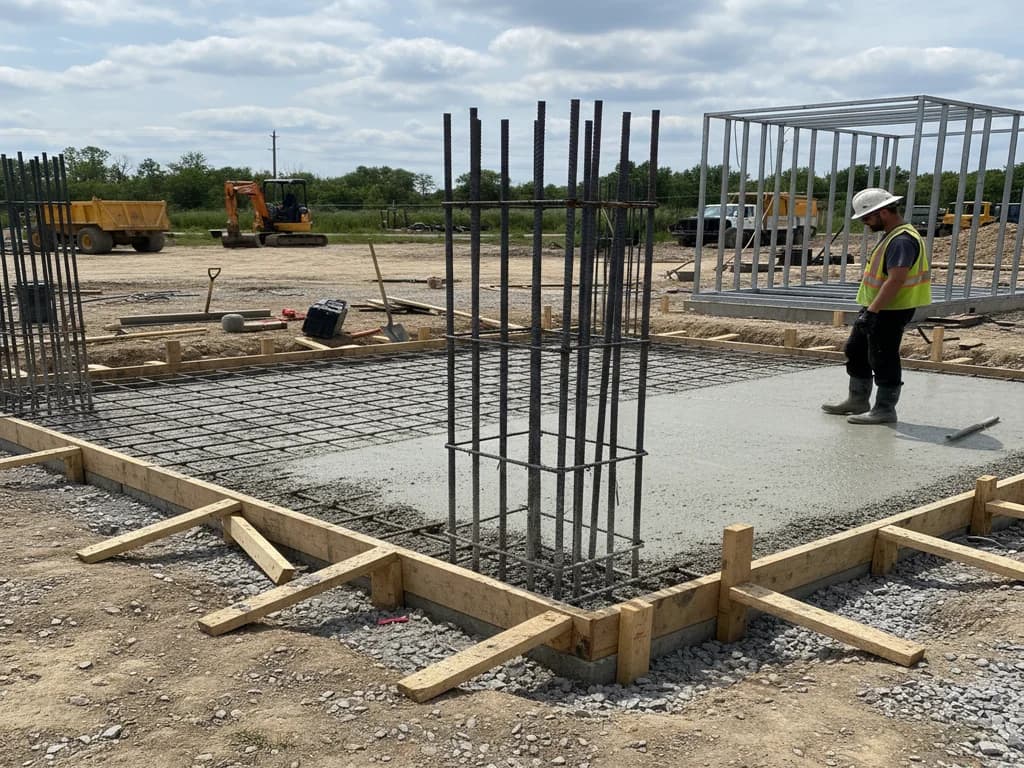
The condition of your installation site can shift the quote significantly. Common site-prep line items:
- Floor leveling. If the existing concrete slab is out of level, it has to be corrected before panel assembly. Leveling compound for minor corrections; structural grinding or self-leveling cement for major corrections.
- Concrete pad for outdoor units. Outdoor walk-ins require a dedicated, reinforced, perfectly-level concrete pad. Pouring the pad is a separate work item before cooler installation begins.
- Existing equipment removal. If we're replacing an old unit, disposal of the existing cooler is in scope.
- Structural reinforcement. Older buildings sometimes need supplemental framing to support the weight of a large walk-in once it's loaded with inventory.
For the complete picture on what your site has to support, see our cooler installation requirements guide.
Electrical Capacity and Upgrades
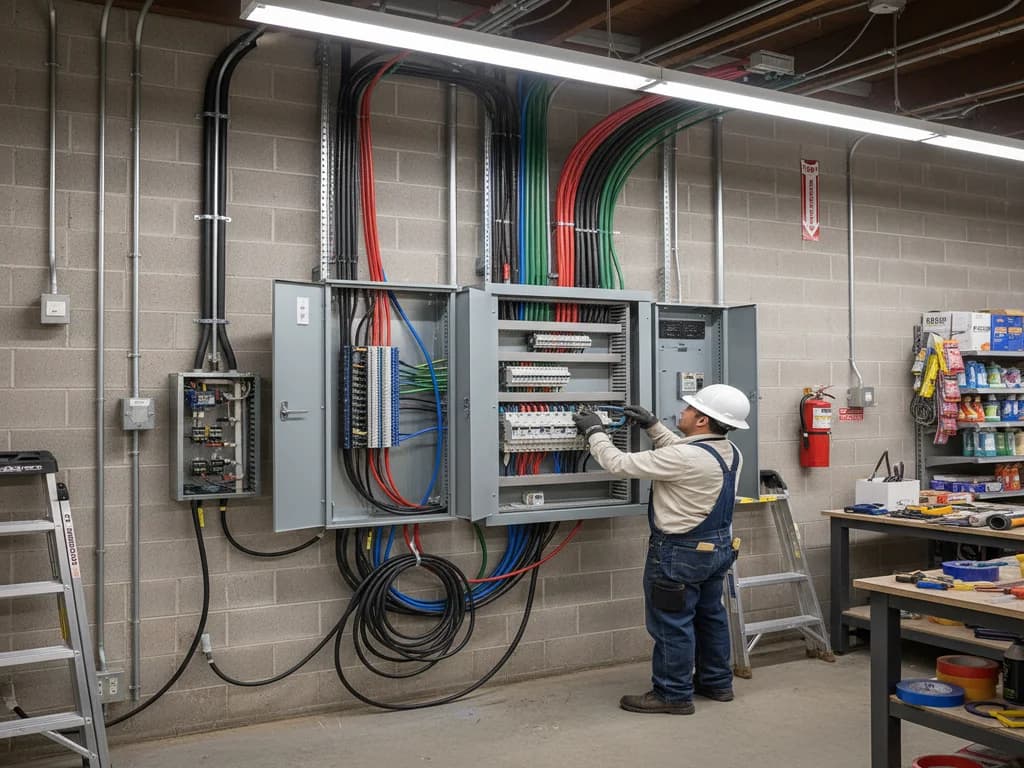
Commercial walk-in coolers draw significant electrical loads. If your existing electrical panel doesn't have capacity for the new system, panel upgrades are part of the project.
Typical electrical scope:
- Dedicated circuit for the compressor, sized to manufacturer specification
- Dedicated circuits for evaporator fan motors and interior lighting
- Voltage verification — larger compressors often require three-phase power; older buildings may only have single-phase
- Panel capacity evaluation — total amperage draw has to fit under your existing service rating, or service upgrade is required
Panel upgrades can range from a few hundred dollars (simple additions to an existing panel with capacity) to several thousand dollars (full service upgrade from utility). We identify electrical requirements during site assessment so nothing surprises you during the build.
Permits and Code Compliance
Walk-in cooler installations typically require building, electrical, and mechanical permits, plus health department sanitation sign-off for food service applications. Permit fees vary widely by jurisdiction — from a few hundred dollars in rural permitting authorities to several thousand in urban municipalities.
We manage the full permit submission as part of our project scope. Full breakdown of what permits are needed and why in our walk-in cooler permits guide.
Indoor vs. Outdoor Configuration
Where the walk-in cooler sits on the property affects cost in both directions. Indoor installations keep HVAC exposure simpler but eat retail or kitchen square footage. Outdoor installations free up interior space but add weatherproofing, concrete pad, and low-ambient controls.
Full decision framework in our indoor vs. outdoor walk-in cooler guide. The right answer depends on your specific priorities and site.
Equipment Brand and Specification
We specify commercial-grade equipment from manufacturers with a track record of reliable long-term performance. Our standard brand preferences:
- Leer for convenience-store-specific walk-ins with strong retail configurations
- KPS (Kysor Panel Systems) for custom panel construction
- Crown Tonka for fully custom walk-in designs
- Heatcraft and Russell for refrigeration systems
These aren't the cheapest options on the market. They are the options we've watched outperform bargain imports across enough projects that we've stopped quoting anything else for serious commercial applications. An extra few percent on the equipment line item pays for itself through years of avoided maintenance, avoided downtime, and lower operating costs.
For the complete product catalog, see our commercial walk-in coolers page.
What a Full Quote Line-Items
A typical commercial walk-in cooler installation quote from us covers:
- Insulated panels — fabricated to size, thickness per spec
- Door system — frame, door panel, hardware, sweep
- Refrigeration equipment — compressor, condenser, evaporator, controls
- Copper refrigerant lines and fittings — fabricated, insulated, brazed
- Electrical materials and labor — circuits, panel work, control wiring
- Site preparation — floor leveling, concrete pad (outdoor), existing equipment removal if applicable
- Structural support — if supplemental framing needed
- Permits and inspections — municipal fees and inspection coordination
- Installation labor — our crew and specialized trades
- Commissioning and calibration — full testing, temperature verification, documentation handoff
Every line explained, every number justified. No hidden extras.
Repair vs. Replace: The Honest Math
If you're pricing out a new installation because your existing walk-in cooler is aging, the honest comparison isn't just new cost vs. current cost — it's new cost vs. the compound cost of continuing to repair an aging unit. That math includes:
- Recurring emergency service calls
- Compressor replacement on failing old units (several thousand dollars installed)
- Elevated energy bills from degraded insulation and failing compressor efficiency
- Inventory loss from unexpected downtime
- Lost revenue during service events
Over a 3-year horizon, most aging units cost more to keep running than the full install price of a new system. Our walk-in cooler maintenance and troubleshooting guides walk through the warning signs that indicate a unit is approaching end-of-life.
Partner With JayComp Development
Commercial walk-in cooler installation is a capital-intensive investment. You can't afford surprises, you can't afford cut corners, and you can't afford to have the project run over budget because someone quoted a flat rate that didn't account for your site.
We quote custom. We line-item every variable. We install to manufacturer spec. And with 24+ years in business and 2,500+ completed projects, we back every installation with the full weight of experience doing this right.
Call JayComp Development at 877-843-0183 or visit our contact page to schedule a site evaluation and receive a detailed, transparent custom quote.
Get a quote
Ready to Plan Your Project?
Call JayComp Development directly at (877) 843-0183, or fill out the form and our team will be in touch. 24+ years of experience, 2,500+ completed projects, and honest guidance on what your project actually needs.
Email: sales@jaycompdevelopment.com
Location: 9310 OK-1 S, Ravia, OK 73455