
Walk-In Cooler Troubleshooting: A Diagnostic Guide for Operators
24+ years in business · 2,500+ completed projects
A walk-in cooler that stops holding temperature is an emergency with a clock on it. Every hour a compressor struggles to recover is an hour your perishable inventory drifts closer to the danger zone and your utility bill climbs. Most operators react the same way: panic, call for service, and hope the fix is cheap.
Before you make that call, most refrigeration problems can be narrowed down with a structured diagnostic pass. Some of the most common issues have fixes your staff can complete in under ten minutes. Others are signals that your unit has reached the end of its useful life and is telling you — loudly — that it's time to plan a replacement rather than sink another repair bill into a failing system.
Going deeper: this page is the quick overview. The Walk-In Cooler Repair Guide has a full guide for every symptom and every part, plus an emergency first-hour plan and food safety rules when a walk-in fails.
This guide walks you through the major symptom categories, what each one typically means, what you can safely check yourself, and when the honest answer is "replace the unit, don't repair it again." JayComp Development does not offer repair or emergency service work. With 24+ years in business and 2,500+ completed projects, we focus on designing and installing new commercial refrigeration systems. The purpose of this guide is to help you diagnose accurately and then make the right decision — whether that decision is a quick in-house fix, a call to a certified refrigeration technician, or a conversation about new equipment. Call our team at 877-843-0183 or reach out through our contact page when you're ready to talk through options.
Before You Start: The Four Minute Diagnostic
Before you escalate any problem, walk through these four checks. A surprising percentage of "broken cooler" calls end at one of them.
1. Power and Breakers
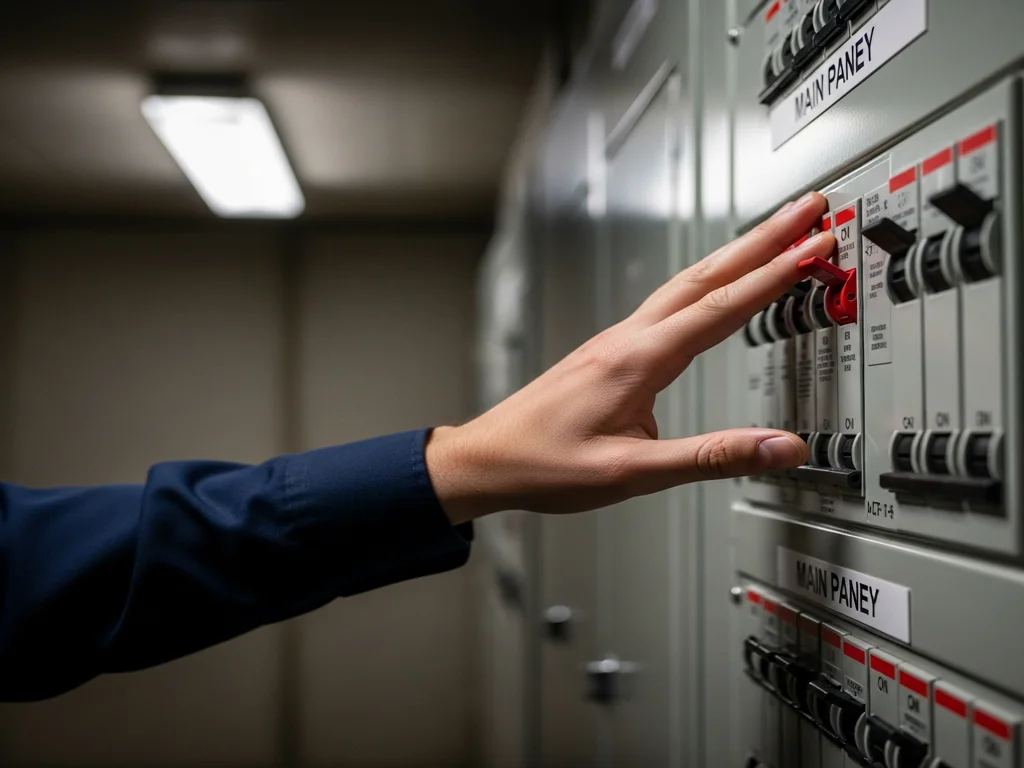
Walk to your main electrical panel. Look for a tripped breaker serving the cooler. Commercial compressors draw a heavy startup surge, and a minor power blip can easily throw a breaker. Flip it fully off, wait thirty seconds, flip it back on. If it trips immediately or within a few minutes, stop — you have an electrical fault and need a licensed professional. Do not keep resetting a breaker that won't hold.
2. Thermostat Setpoint
Check the digital or mechanical thermostat. A setpoint that has been bumped or reset can make a perfectly healthy cooler look broken. Standard commercial refrigeration holds between 35°F and 38°F. If the display reads correctly but the internal temperature measured by a second thermometer is far off, your sensor has drifted and needs calibration or replacement.
3. Door Seal and Blocked Airflow
Walk inside. Is the door closing fully? Is the sweep dragging? Are inventory boxes stacked against the evaporator fan guards? Any of these will force the system into continuous runtime while never actually reaching setpoint. Move inventory at least 12 to 18 inches clear of the fans. Wipe down gaskets and check for any visible gaps when the door closes.
4. Condenser Coil Visibly Dirty
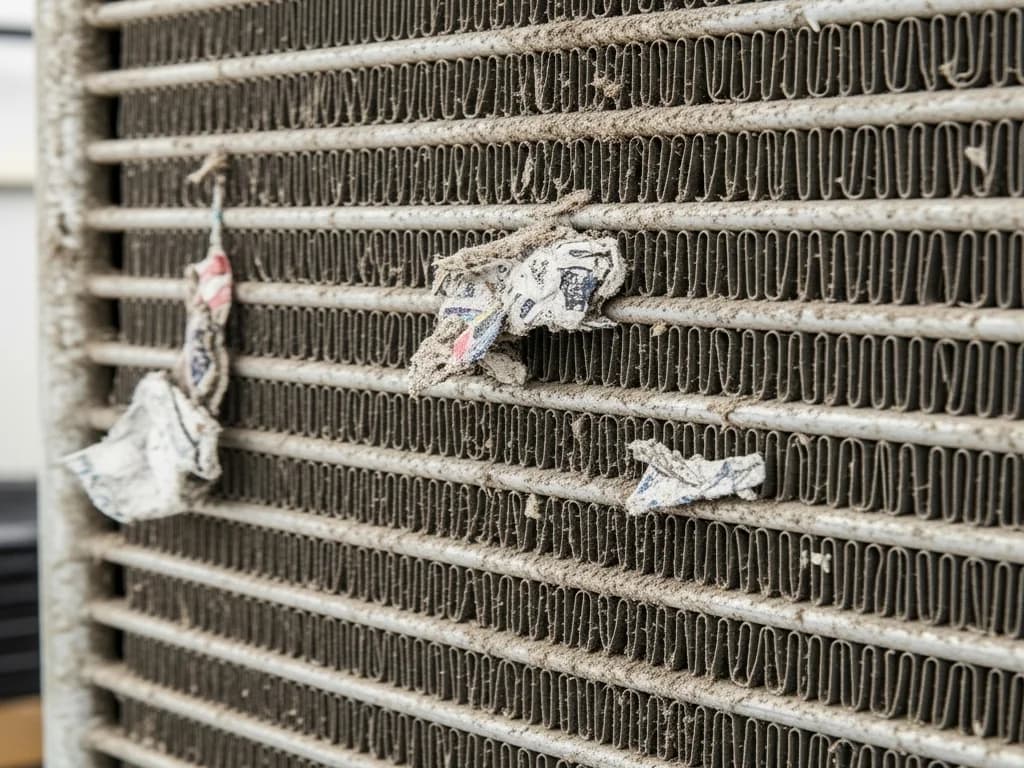
If your condenser is accessible — typically on top of the unit, behind the building, or on the roof — look at it. A condenser coil choked with dust, grease, or cottonwood fluff cannot reject heat. The compressor responds by running constantly and drawing excessive amperage. Vacuum it in the direction of the fins, or keep it on your monthly maintenance list going forward.
If none of these resolves your issue, move into the symptom-specific sections below. Your ongoing preventive care routine matters here too — keeping drain lines, coils, and gaskets in good shape prevents most of these symptoms from starting. Our walk-in cooler maintenance guide covers the daily, weekly, and monthly tasks that head off this kind of troubleshooting call.
Symptom: Temperature Fluctuations or Rising Temps
The most critical failure mode. Your logs show a climb, or your thermometer reads well above setpoint, and the system isn't recovering.
Likely Causes
- Door seal failure. A gasket that's cracked, flattened, or torn lets warm humid air pour into the cold zone continuously. Inspect the entire perimeter of the gasket. Look for light visible through the seal with the door closed (use a flashlight from inside at night).
- Dirty condenser coil. Already covered above — the single most common root cause.
- Low refrigerant charge. A slow leak reduces the system's ability to absorb heat. The compressor runs but never reaches setpoint. This requires a certified refrigeration technician. It also often signals that the copper line set or evaporator is degrading in an aging unit.
- Failing compressor. When valves inside the compressor wear out, the unit loses its ability to move refrigerant effectively. This is expensive to repair, and on an older system, it's typically the point at which replacement makes more sense than another repair.
When to Replace Instead of Repair
If your unit is more than ten years old and is experiencing recurring temperature issues, the economics almost always favor replacement. Modern systems use far more efficient compressors, higher R-value panel insulation, and electronic commutated motors that slash energy consumption. Our walk-in cooler energy efficiency guide walks through the savings math in detail. Want a straight answer on whether your unit is past its prime? Call our team at 877-843-0183.
Symptom: Excessive Ice or Frost Buildup
A thin frost on the evaporator coil between defrost cycles is normal. Thick ice encasing coils, dripping from the ceiling, or ringing the door frame is not.
Likely Causes
- Blocked airflow. Inventory pressed too close to evaporator fans prevents cold air from circulating. The stagnant air freezes moisture directly onto the coil.
- Failed defrost cycle. Every walk-in cooler runs scheduled defrost cycles that briefly warm the evaporator to melt accumulated frost. A broken defrost timer, failed defrost heater, or bad termination thermostat stops this from happening. Frost becomes ice, ice becomes a solid block, and eventually the fan blades strike the ice and shatter.
- Warm air infiltration. A failed door gasket or a door left ajar pulls humid room air into the freezing interior, where it condenses and immediately freezes onto every cold surface.
- Drain line frozen or clogged. Defrost meltwater has to drain somewhere. If the drain line is blocked or the drain heater has failed, meltwater refreezes inside the unit on the next cycle, building ice in places it doesn't belong.
What to Do
Clear the immediate blockage: move inventory, melt the ice manually with a shop fan (never with an open flame or heat gun), and inspect the door seal. If ice returns within days, you have a failed defrost component — work for a certified refrigeration technician. Recurring heavy ice on an older unit is one of the clearest signals that the system is near end-of-life.
Symptom: Unusual Noises
A healthy commercial cooler runs with a low, steady hum. New or louder noises always signal that something mechanical is degrading.
What Different Sounds Usually Mean
- Squealing. A worn fan belt, a dry bearing in a fan motor, or a failing evaporator motor. Catching this early lets you replace a single motor; ignoring it lets the motor seize, which can damage the fan blade and coil.
- Rattling. Loose mounting hardware on the condensing unit, a failing compressor mount, or debris inside a fan guard. Shut the unit down long enough to inspect visually. If the rattling is internal to the compressor itself, that's a major mechanical issue.
- Grinding. Almost always internal to a failing motor or compressor. This is the sound of metal-on-metal wear. Plan for a major repair or replacement decision.
- Clicking with no start. A bad start relay or contactor, a seized compressor, or a severe electrical fault. A licensed technician can verify which.
Never ignore a new noise. A fan motor replacement on a catch-it-early bearing costs a fraction of what a compressor replacement costs after the motor seizes and damages surrounding components.
Symptom: Compressor Runs Continuously
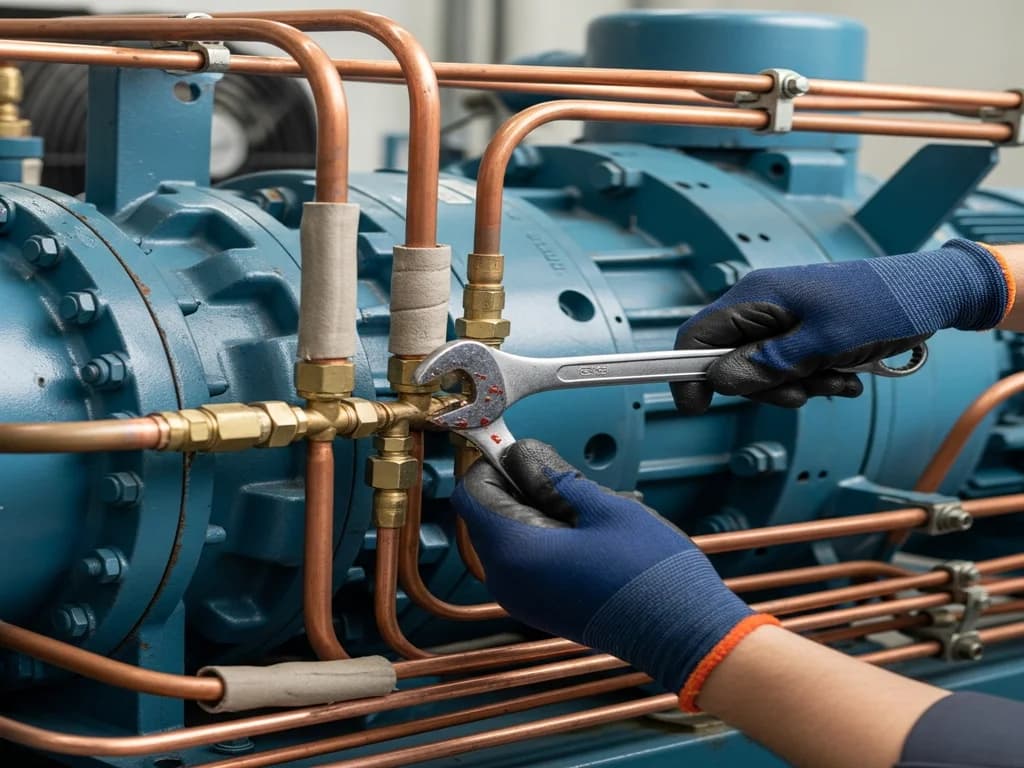
Your compressor is supposed to cycle on and off throughout the day. If it's running near continuously and still barely holding setpoint, it's working against something.
Likely Causes
- Heat rejection failure — dirty condenser or blocked airflow around it.
- Low refrigerant charge from a slow leak.
- Degraded panel insulation. On older units, polyurethane panels that have absorbed moisture lose much of their R-value. The system is fighting heat infiltration continuously. Maintenance cannot restore this.
- Oversized load — inventory repeatedly loaded warm, or door openings that are too frequent or too long.
- Failing compressor valves or piston rings, losing efficiency even when the system is otherwise healthy.
The Replacement Conversation
Continuous compressor operation on an older unit is often the clearest signal the system is past its useful economic life. Between the elevated energy bill, the imminent compressor failure, and the steady erosion of your thermal envelope, the repair path gets expensive fast. A new walk-in cooler installation with modern efficiency features typically pays back within two to four years from energy savings alone.
Symptom: Water Pooling Inside or Outside the Unit
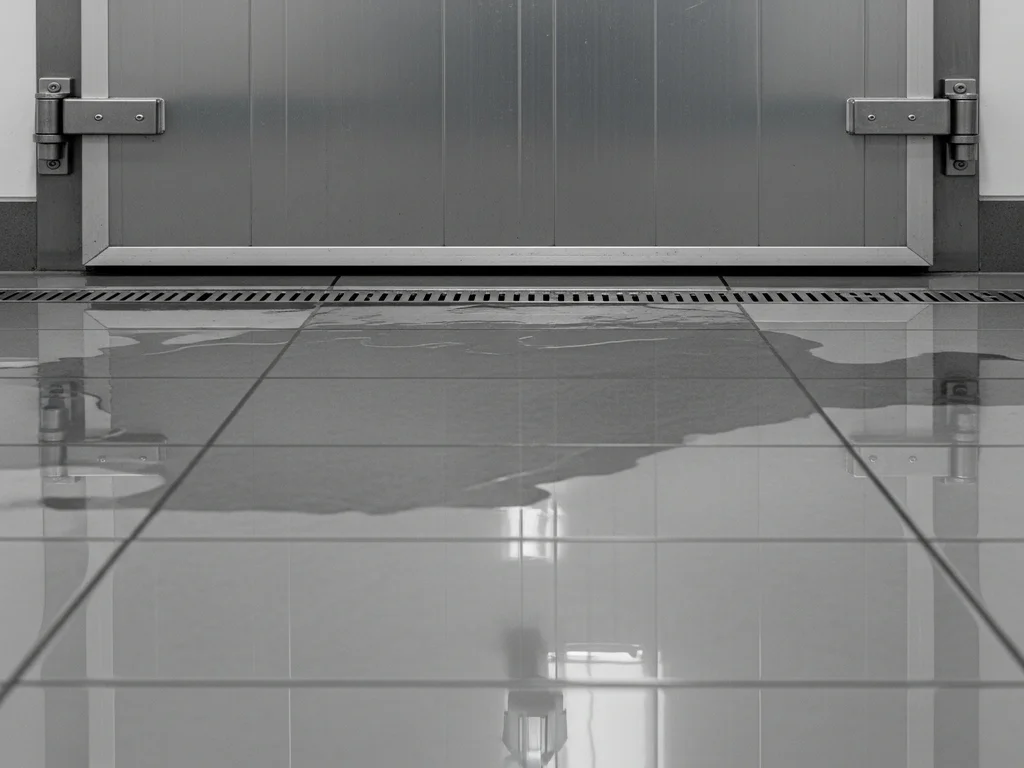
Water is a downstream symptom. Track it upstream to the cause.
Likely Causes
- Clogged drain line. Algae, mold, or debris has blocked the condensation drain. Water backs up in the drain pan and overflows into the cooler. Monthly vinegar flushes prevent this.
- Failed drain line heater. In cold environments, the drain line runs through freezing air. A heater keeps the water flowing. When the heater fails, the drain freezes, water backs up, and you get ice formation at the drain pan followed by leaks when it thaws.
- Door seal failure. Humid room air condensing on cold interior surfaces and running off. Fix the gasket.
- Internal refrigerant leak on the evaporator. If the leak is on the coil, you can get liquid water from condensation runoff combined with a refrigerant issue. Technician work.
Address water quickly. Standing water damages floor panels, rots structural substrate, and creates a serious slip hazard for staff.
Symptom: Utility Bill Climbing
Less immediately alarming than a temperature loss, but one of the most important signals to take seriously.
A rising electricity bill with unchanged volume and unchanged local rates almost always traces back to the refrigeration system. Aging compressors pull significantly higher amperage to do the same work. Dirty coils force longer runtime. Degraded insulation compounds the problem. Failing fan motors run hotter and less efficiently.
You can objectively measure this. A certified technician can perform an amp-draw test on your compressor and motors and compare against manufacturer specifications. If the readings are significantly above spec, you are paying the utility company a premium to run a unit that is no longer meeting its design efficiency. At that point, the ROI math on a new installation shifts decisively in favor of replacement.
When to Stop DIY and Call a Pro
Some diagnostic and repair work belongs exclusively to licensed refrigeration professionals. You should never attempt the following without proper training and certification:
- Anything involving refrigerant. EPA regulations require certification to handle refrigerant. Venting it accidentally is a federal violation with significant fines. A technician uses electronic leak detectors and pressure gauges to locate and repair the actual issue — "topping off" a leaking system is not a real fix.
- Line-voltage electrical work. Commercial refrigeration runs at 208v to 460v. Mistakes are fatal or cause fires.
- Internal compressor diagnostics. Requires specialized diagnostic equipment and experience to interpret.
- Defrost control circuit diagnosis. Complex timing and sequencing logic; requires wiring schematics and live-voltage testing.
For any of these, contact a reputable local commercial refrigeration service company. We intentionally do not occupy this space. JayComp Development focuses exclusively on designing and installing new commercial refrigeration systems — a different discipline than field repair — so that when you do invest in new equipment, it is specified correctly, installed correctly, and delivers a decade or more of reliable service.
The Honest Replacement Conversation
There is a point where troubleshooting and repair stop making financial sense. The short version: when the repair bill, the elevated energy cost, the risk of sudden downtime, and the lost productivity during breakdowns exceed what a new installation would cost amortized over its first three to five years, replacement is the correct call.
Signals that you've reached this point:
- The unit is more than 10 years old and experiencing recurring temperature issues.
- The compressor has already been repaired or is running near continuously.
- Your utility bills have climbed noticeably despite unchanged operations.
- Panel insulation has absorbed moisture or shows visible damage.
- Your system still uses R-22 refrigerant, which is phased out and increasingly expensive or unavailable.
- You've had two or more major service events in the last eighteen months.
What a Modern Replacement Looks Like
New commercial walk-in coolers are dramatically more efficient than units from even a decade ago. High-density polyurethane insulation, EC motors, LED interior lighting, high-efficiency scroll compressors, and smart digital controls all combine to cut refrigeration energy use significantly.
We specify commercial-grade equipment from established manufacturers for each project:
- Leer for purpose-built convenience-store walk-ins
- KPS (Kysor Panel Systems) for custom panel construction
- Crown Tonka for fully custom walk-in designs
- Heatcraft and Russell for high-performance refrigeration systems
You can see our broader product selection on the commercial walk-in coolers page, and review pricing factors in our walk-in cooler installation cost guide.
Installation Quality Is What Makes the Savings Real
A high-efficiency unit only delivers its rated performance if it is installed correctly. Panel alignment, refrigerant charge, electrical configuration, and door-seal integrity all have to be exact. Our full walk-in cooler installation process is built to deliver a system that performs at spec from day one — and maintains that performance with nothing more than the routine maintenance covered in our separate maintenance guide.
Ready to Plan a Replacement?
If your troubleshooting pass has landed on "this unit is done," we can help you plan what comes next. Our process starts with a site evaluation — existing dimensions, workflow, electrical capacity, usage volume, and your business goals. From there we specify the right equipment, engineer the mechanical and electrical integration, and coordinate installation to minimize downtime.
Learn more about our full commercial refrigeration services, or call JayComp Development at 877-843-0183 to schedule a site evaluation. You can also reach us through our contact page. We'll give you an honest assessment of whether your existing unit has life left in it or whether replacement is the smarter path — and with 24+ years and 2,500+ projects behind us, we'll only recommend moving forward when the math clearly favors it.
Get a quote
Ready to Plan Your Project?
Call JayComp Development directly at (877) 843-0183, or fill out the form and our team will be in touch. 24+ years of experience, 2,500+ completed projects, and honest guidance on what your project actually needs.
Email: sales@jaycompdevelopment.com
Location: 9310 OK-1 S, Ravia, OK 73455