
Commercial Vent Hoods: What We Supply, What We Install
24+ years in business · 2,500+ completed projects
Adding hot food to a convenience store is one of the highest-ROI moves an owner-operator can make. Fresh pizza, breakfast sandwiches, roller grills, fryers, and full QSR concepts dramatically shift your ticket averages and pull customers inside the store. But the moment you introduce commercial cooking equipment to a retail space, you inherit a set of structural, safety, and regulatory requirements that all start in the same place — the commercial vent hood hanging above your cook line.
JayComp Development supplies and installs Captive Air commercial vent hoods as part of our broader retail equipment and development services. Captive Air is the industry's most widely specified commercial kitchen ventilation brand for a reason — they engineer hoods that meet every relevant fire, health, and building code while delivering the airflow, capture efficiency, and finish quality that commercial food service demands for the long haul.
With 24+ years in business and 2,500+ completed projects, we've specified and installed commercial vent hoods across more convenience-store hot food programs, liquor-store delis, travel-center QSRs, and ground-up c-store builds than most operators will see in a career. Call our team at 877-843-0183 or reach out through our contact page to talk through your project.
Why Commercial Vent Hoods Aren't Optional
A commercial vent hood isn't a comfort feature. It's a structural, code-mandated piece of your cooking setup — and skipping it or getting it wrong is one of the fastest ways to lose an occupancy permit, a health inspection, or an entire building.
They Protect Indoor Air Quality
Commercial cooking releases grease vapor, smoke, steam, and intense odor into the air constantly. Without a proper exhaust system, all of it settles onto your retail fixtures, your merchandise, your ceiling tiles, and your customers. A layer of grease builds on everything inside the building within weeks. Your store starts to smell like a deep fryer. Customers stop coming in.
A correctly sized, correctly installed commercial vent hood captures those byproducts at the source and exhausts them to the roof. The retail floor stays clean, the air stays fresh, and your cooking equipment can run hard without trashing the environment around it.
They Prevent Grease Fires
Grease vapor is the single most flammable byproduct a commercial kitchen produces. Accumulated in ductwork or a ceiling cavity, it becomes a hidden fuel source waiting for a flare-up on the grill. A Type 1 hood pulls grease vapor through specialized baffle filters that trap heavy particles before they reach the ductwork, and integrates an automatic fire suppression system that deploys chemical extinguishing agent directly onto the cooking surface if a fire starts.
Captive Air hoods meet NFPA 96 — the national fire code for commercial cooking ventilation — and every hood we install passes fire marshal inspection.
They're Required by Code
Local municipalities mandate commercial exhaust hoods for essentially all commercial cooking applications. Fire marshals, health inspectors, and building code officials all have enforcement authority. Operating without a compliant hood means immediate closure, heavy fines, and voided commercial insurance. The question isn't whether you need a hood — it's which hood, sized how, installed by whom.
The Hoods We Supply
Captive Air — Our Primary Brand
We specify and install Captive Air commercial vent hoods as our standard. Captive Air is an American manufacturer that has engineered the commercial ventilation market for decades and supplies hoods across virtually every significant national convenience-store and QSR chain in the country.
What we buy from Captive Air on your behalf:
- Type 1 grease hoods for any cooking equipment that produces grease or smoke — fryers, flat-top grills, charbroilers, high-volume roller grills with grease-producing product, pizza ovens with heavy-meat applications. For the full distinction between hood types and what you actually need, our Type 1 vs Type 2 hood guide breaks it down symptom-by-symptom.
- Type 2 steam/heat hoods for dishwashers, pasta cookers, high-volume coffee, and baking equipment that generates moisture and heat but no grease.
- Integrated fire suppression systems — thermal sensors, chemical tanks, targeted nozzles, manual pull station, and automated fuel shut-off.
- Make-up air (MUA) units — matched exactly to the exhaust volume of the hood so your building doesn't go negative-pressure and choke the hood's airflow.
- Upblast exhaust fans with hinged curbs and grease containment boxes for the rooftop side of the system.
- Heavy-gauge welded grease ductwork per NFPA 96, fabricated and installed to code.
Captive Air hoods come standard in high-grade stainless steel construction with smooth welded seams, high-intensity shatterproof lighting, and pitched grease collection troughs. All of this matters for both fire code and health inspection.
Why We Don't Chase Cheaper Hoods
The commercial hood market has a long tail of cheaper imports and off-brand manufacturers. Some of them technically meet code on the day they're installed. Very few survive five years of actual commercial kitchen use without failing seams, corroding interior surfaces, or leaving you stranded when a part needs replacement. When we install the cooking ventilation on a project, we're installing a system the operator needs to run hard for a decade or more. Captive Air is the brand that delivers that.
Type 1 vs Type 2: Which You Need
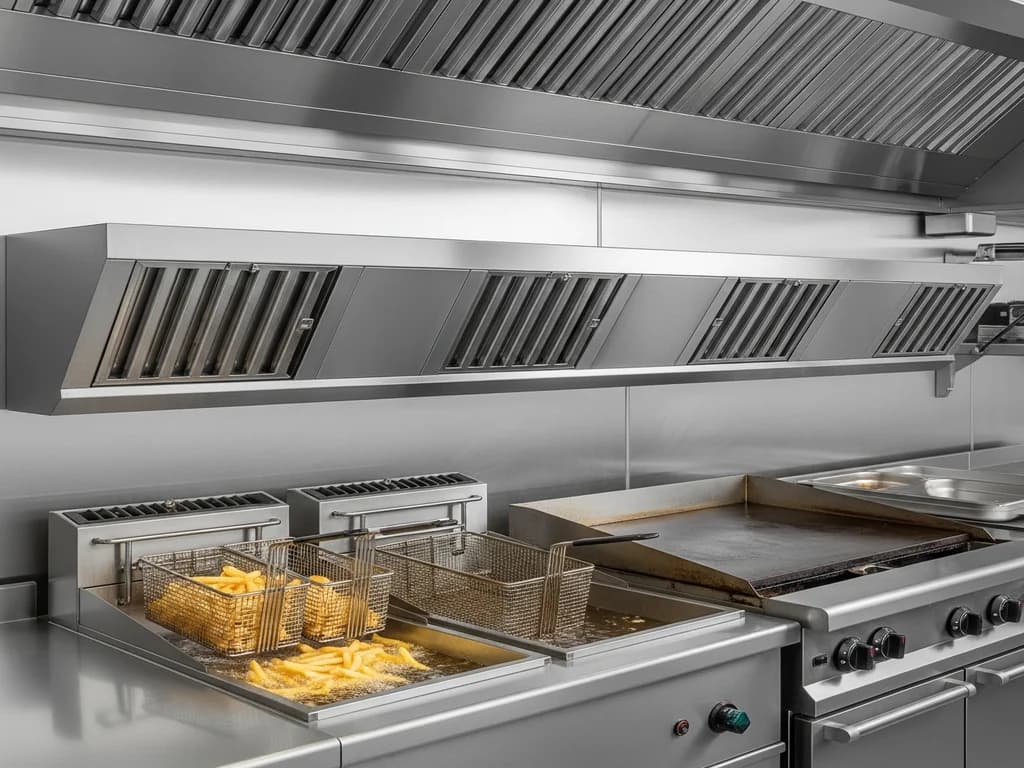
The fundamental choice in commercial kitchen ventilation is Type 1 versus Type 2. This is a code distinction, not a budget distinction.
Type 1 hoods are mandatory any time your cooking equipment produces grease or smoke. This includes fryers, flat-top grills, charbroilers, high-volume woks, and certain pizza ovens. Type 1 hoods require heavy-gauge welded ductwork, integrated fire suppression, and grease baffle filters. They are the more expensive, more heavily regulated option because the risk profile they address — grease fires — is the highest.
Type 2 hoods handle heat, steam, and odor, but no grease. They are appropriate for commercial dishwashers, pasta cookers, coffee roasters, baking ovens with no grease-producing product, and similar applications. They do not require fire suppression and use standard galvanized ductwork.
You cannot use a Type 2 hood over Type 1 equipment under any circumstances. If an inspector catches a fryer under a Type 2 hood, the kitchen shuts down immediately. For a deeper breakdown of which equipment triggers which type, see our Type 1 vs Type 2 hood comparison.
If you're not sure which hood your cooking plan requires, call us at 877-843-0183 and we'll walk through your menu and equipment list.
Integrated Fire Suppression Systems
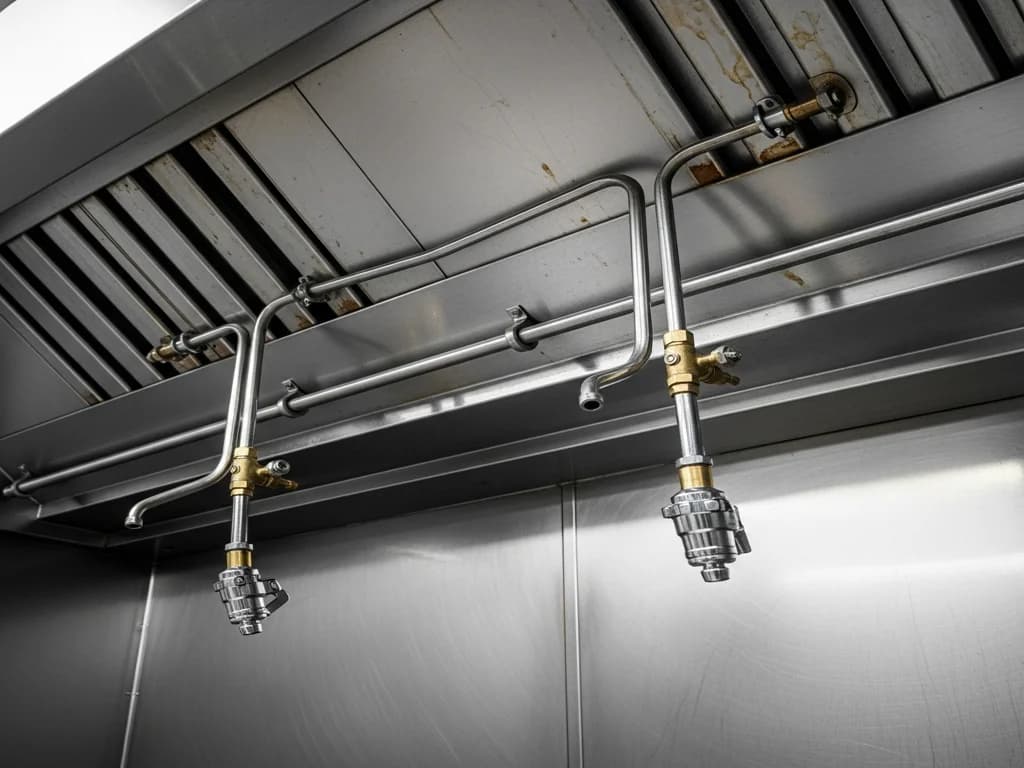
Every Type 1 hood we supply includes an integrated wet-chemical fire suppression system. The components required to meet code:
- Fusible links or thermal detectors positioned above the cooking surfaces
- Targeted nozzles aimed at the cooking vats, the plenum chamber, and the entrance to the exhaust ductwork
- Automatic fuel shut-off that severs the gas line or electrical power to the cooking equipment the moment the system deploys
- A manual pull station along the egress path for staff activation
Before the fire marshal signs off on your certificate of occupancy, they will test the suppression system with a puff test or balloon test to verify the chemical lines are clear and the nozzles deploy at the correct pressure. We install to pass that inspection the first time.
Ongoing, your suppression system needs semi-annual certified inspection and tagging. We hand off the system in a known-good state; a local certified fire protection company handles the ongoing inspection cycle after that.
Make-Up Air: The Other Half of the System
A commercial vent hood pulls thousands of cubic feet of conditioned indoor air out of your building every minute. That air has to be replaced. If it isn't, your building goes into severe negative air pressure — doors slam on their own, drafts pull through window seals, your HVAC system gets overwhelmed, and most importantly, the hood loses its capture efficiency and starts dumping smoke and grease back into the retail space.
Every Captive Air hood we install ships with a matched make-up air (MUA) unit engineered to replace the exhausted air at a balanced rate. The MUA is tempered — heated or cooled to an appropriate range — so the kitchen remains a usable work environment year-round.
Air balancing is a specialized step after installation. Our technicians measure the actual CFM coming in and going out, adjust fan speeds, and dial the system into equilibrium. Skipping this step is one of the most common reasons a fresh installation fails a fire marshal walkthrough.
Rooftop Equipment and Ductwork
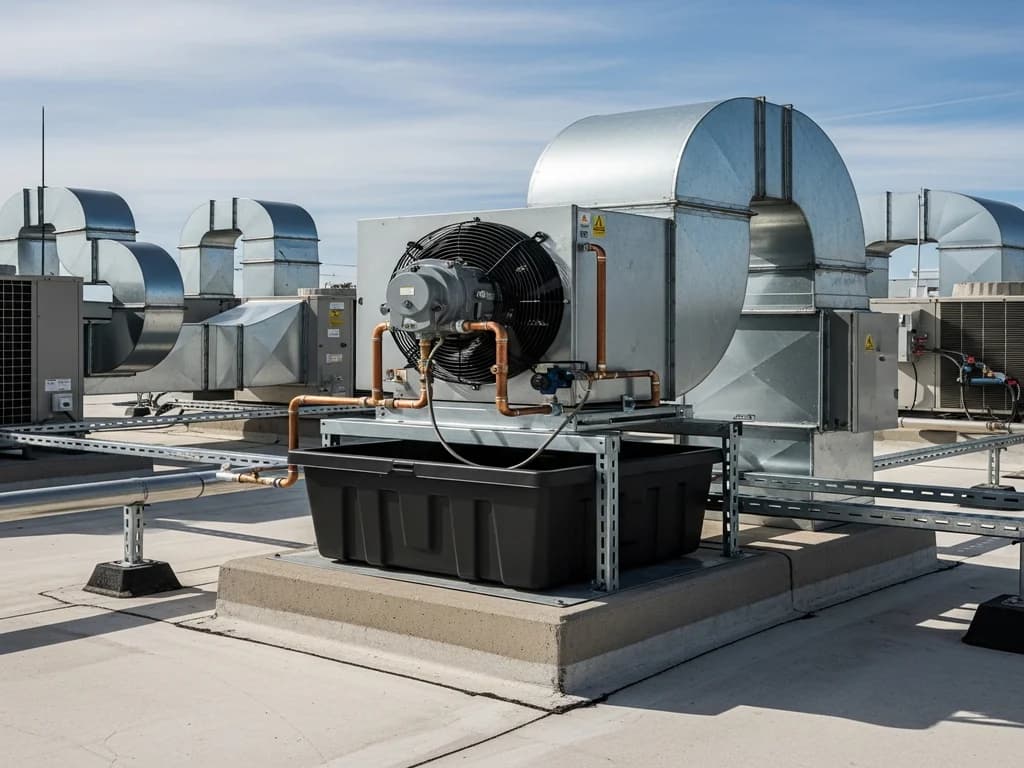
Your cooking exhaust has to reach open air — which means roof penetration, rooftop-mounted equipment, and code-compliant ductwork between the hood and the fan.
The ductwork. Code requires heavy-gauge carbon steel or stainless steel for all Type 1 grease ducts, with every seam, joint, and connection continuously welded liquid-tight. This ensures any grease fire that does ignite inside the duct stays trapped until it exits the roof, protecting the surrounding building structure. We fabricate and install to NFPA 96 standard on every project.
The rooftop fan. Commercial kitchens require upblast exhaust fans — they discharge air vertically, pushing grease away from the roof surface instead of coating it. The fan sits on a roof curb at a code-mandated minimum distance above the roof deck, and includes a hinge kit so certified cleaning crews can service the ductwork below it.
Grease containment. Even with an upblast fan, some liquid grease will escape over time. A rooftop grease containment box at the base of the fan catches runoff into an absorbent pad that gets swapped during routine maintenance, preventing the slow destruction of your roof membrane that untreated grease causes.
Clearances. Type 1 grease duct running through a building envelope has to maintain specific clearances from combustible structure — typically 18 inches — or be wrapped in fire-rated insulation that allows reduced clearance. We plan duct routing during design so these clearances don't force expensive structural modifications mid-build.
For the full code-level detail on these requirements, see our vent hood requirements breakdown.
Installation: How Our Team Delivers
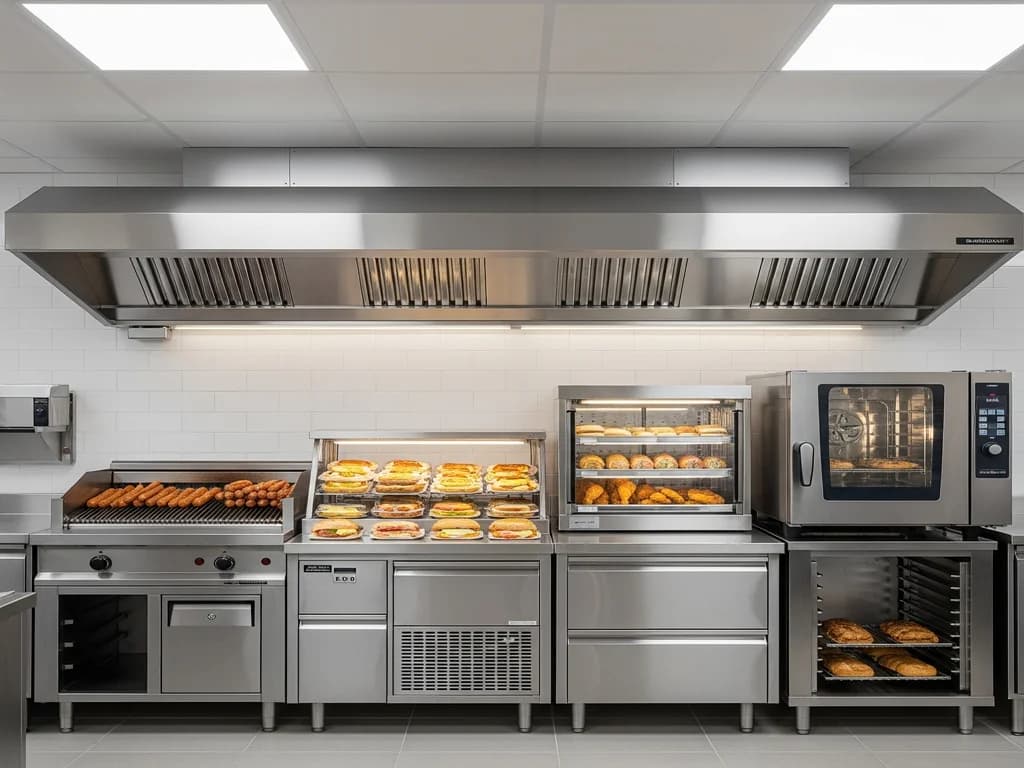
A commercial vent hood installation is a coordinated effort across multiple trades: mechanical, electrical, roofing, fire suppression, and structural. Mistakes in any one of them compound into the others. We manage the entire sequence as a single scope of work on every project we install.
Our vent hood installation process covers:
- Site assessment and load planning — ceiling heights, structural capacity, roof penetration planning, electrical panel evaluation, HVAC interaction.
- Hood specification and sourcing — sized to your cook line, matched to your make-up air, finished to your brand standards.
- Structural reinforcement — supplemental framing if needed to carry the weight of the hood and ductwork.
- Ductwork fabrication and installation — heavy-gauge welded grease duct to NFPA 96, routed to maintain clearances.
- Roof penetration and upblast fan — coordinated with roofing contractors to maintain roof warranty and weather seal.
- Fire suppression installation — tanks, lines, thermal sensors, manual pull station, fuel shut-off integration.
- Make-up air unit installation and balancing — matched CFM, tempered supply, measured and dialed to equilibrium.
- Inspection coordination — fire marshal, health department, building inspector, all in one scheduling sequence.
You deal with one project manager on our side from start to finish.
Where Vent Hoods Fit in Your Store
A commercial vent hood is one mechanical system in a broader c-store hot food program. How it fits into your overall operation depends on the kind of food service you're building.
- Standalone hot food station — roller grills, bun warmers, heated displays — often Type 1 hood, modest footprint. See our hot food program setup guide.
- Full c-store kitchen — made-to-order sandwiches, fresh pizza, fryers, grills — Type 1 hood over the primary cook line, possibly Type 2 over a prep dishwasher. See our c-store kitchen design guide.
- QSR integration — a branded quick-service restaurant inside your store — usually dedicated kitchen space with dedicated Type 1 hood per the QSR's spec. See our QSR inside convenience store breakdown.
For a broader view of how hood design integrates with the overall food service plan, our convenience store food service design pillar covers traffic flow, queue design, equipment placement, and hood integration as one coordinated system.
Pricing: What Drives Your Quote
We don't publish flat-rate pricing on commercial vent hood projects. Every installation has its own variables — hood size and type, make-up air sizing, existing electrical capacity, roof type and condition, ductwork run length, structural reinforcement needs, and permit fees. What we do is walk you through exactly why every line item is in your quote.
Main cost drivers:
- Hood size and type. Type 1 hoods cost meaningfully more than Type 2, and a 12-foot hood costs meaningfully more than a 6-foot.
- Fire suppression system. Nozzle count scales with the cooking equipment you're protecting.
- Make-up air unit. Sized to hood CFM; larger hoods need larger MUA.
- Ductwork length and complexity. Longer runs and more turns cost more.
- Roof penetration. Type of roof (single-ply membrane, BUR, metal) and proximity to existing rooftop equipment affect complexity.
- Structural reinforcement. Older buildings sometimes need supplemental framing to carry hood weight.
- Permits and inspection coordination. Varies by municipality.
Call us at 877-843-0183 for a custom quote or reach out through our contact page.
Partner With JayComp Development
Your commercial vent hood is one of the most code-scrutinized pieces of equipment you'll ever install. It's also the difference between a hot food program that runs cleanly for a decade and one that fails its first health inspection or — worse — catches fire during a Friday lunch rush.
We specify Captive Air. We install to NFPA 96. We coordinate every trade on site so the system is inspection-ready the first time. With 24+ years in business and 2,500+ completed projects across convenience stores, travel centers, grocery operations, and QSR builds, we've installed enough of these systems to know what actually holds up — and what gets called back in three years.
Ready to plan your commercial vent hood project? Call JayComp Development at 877-843-0183 or visit our contact page to schedule a site evaluation and get a custom quote on Captive Air equipment and installation.
Get a quote
Ready to Plan Your Project?
Call JayComp Development directly at (877) 843-0183, or fill out the form and our team will be in touch. 24+ years of experience, 2,500+ completed projects, and honest guidance on what your project actually needs.
Email: sales@jaycompdevelopment.com
Location: 9310 OK-1 S, Ravia, OK 73455